
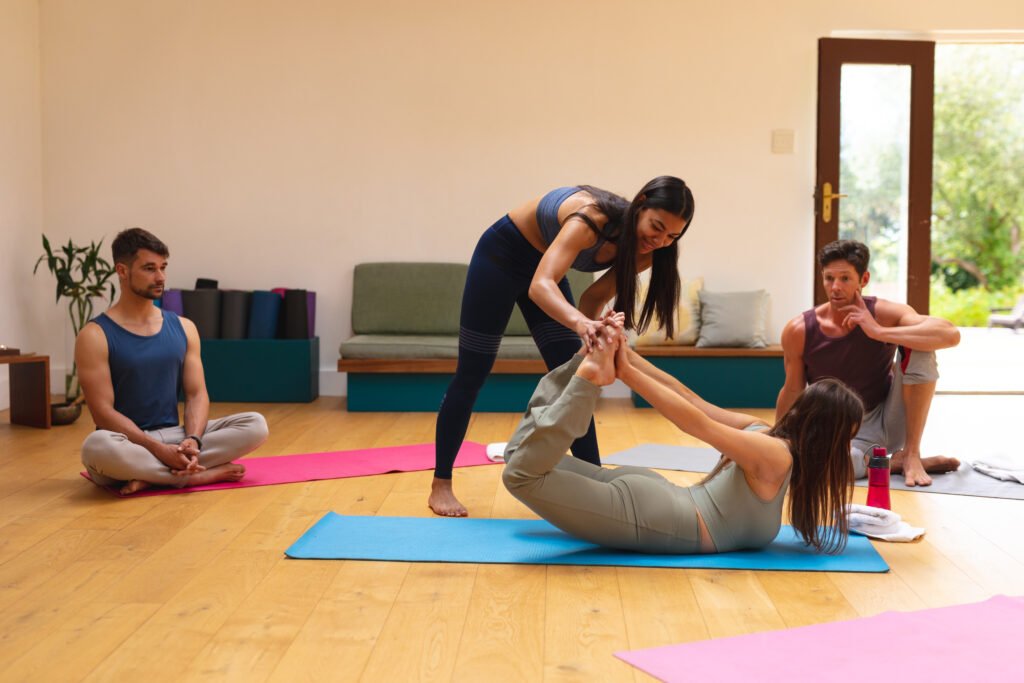
How yoga is being used as a complementary therapy for Anxiety, Depression, PTSD, etc.
- Yoga promotes relaxation response through slow breathing and mindfulness.
- It enhances positive affect and motivation by stimulating the vagus nerve.
- ️Regular practice has been shown to lower the levels of the stress hormone.
- It also boosts serotonin, dopamine and oxytocin hormones (feel good hormones) which help promote happiness and pleasure while reducing depression and anxiety.
- Yoga as a science, is generally accepted as the timeless legacy of Indian origin dating as far back as five thousand years. The word mind is often translated as manas. Manas means the entity by means of which the living being contemplates Manuteneneti manah.
- Yoga helps our mind to become emotionally stable and conscious. Patanjali Yoga Sutra hands out kriya yoga, as a very practical means to achieve Mental Health for an average individual leading a mundane worldly life.
Balancing the Mind through Yoga for Better Mental Health
While practicing yoga we should remain awake and sensitive to all events and happenings taking place within and around oneself. It results in our consciousness becoming free and one-pointed. Asanas use passive stretching of the spinal column and peripheral body parts. Resultant neutral state of attention may lead one to the transcendental state of consciousness. Through Mudras and Bandhas autonomic nervous system, as a whole, gets influenced favorably, contributing to attaining neutral state of attention.
Stress and Yoga
According to Patanjali Yoga Sutra, stress can be defined as “a state of psycho- physiological imbalance experienced due to identification with one’s modification of mind emanating from our existential affiliations.
In Yoga, it is believed that mental dynamics can be calmed down completely. Yoga encourages you to focus on the present moment, which can help you disengage from racing thoughts and worries about the past and future.
e.g. “How Pranayama & Asanas Can Help Manage Anxiety
Relaxing poses can trigger the parasympathetic nervous system, allowing the body and mind to calm and anxiety to ease. Asana stretches the body along with stimulating different hormones. The stretch relaxes the body and calms the mind. Pranayama, while practicing pranayama we give attention to breath. Breath promotes purification of both the mind and body. This also helps in decreasing unnecessary thoughts that promote anxiety.
How Yoga Supports Mental Well-Being
Yoga combines breath, movement, and mindfulness in a way that deeply influences the brain and nervous system.
Key Mental Health Benefits of Yoga
✔ Promotes relaxation response through slow breathing and mindfulness
✔ Stimulates the vagus nerve, enhancing positive mood and motivation
✔ Reduces cortisol levels — the primary stress hormone
✔ Boosts serotonin, dopamine, and oxytocin — the “feel-good” hormones
✔ Develops emotional stability, focus, and self-awareness
✔ Improves sleep and reduces fatigue
Yoga doesn’t just reduce symptoms — it builds resilience from within.
Patanjali’s Perspective: Yoga for the Mind
According to the Patanjali Yoga Sutra, yoga is a scientific method to stop the unnecessary modifications of the mind (Chitta Vritti Nirodha).
Patanjali mentions Kriya Yoga as a practical approach for everyday householders to achieve mental harmony. It includes:
- Tapas (discipline)
- Svadhyaya (self-study)
- Ishvara Pranidhana (surrender to higher consciousness)
This systematic practice helps a person overcome inner conflicts, stress, and emotional suffering.
Balancing the Mind Through Yogic Practices
While practicing yoga, remaining aware, alert, and sensitive to internal changes increases present-moment consciousness.
How Yoga Techniques Affect the Brain
- Asanas: Stretch the spine and body, relax the nervous system
- Mudras & Bandhas: Influence the autonomic nervous system favorably
- Meditation: Creates a neutral, one-pointed state of attention
- Breath awareness: Clarifies the mind and stabilizes emotions
These experiences can lead into a transcendental state, where mental chatter dissolves.
Understanding Stress in Yogic Science
According to yoga philosophy, stress is:
“A psycho-physiological imbalance caused by attachment to thoughts and emotions emerging from life situations.”
Yoga teaches that mental turbulence can be completely calmed by:
- Detaching from excessive thoughts
- Focusing on the present moment
- Relaxing the nervous system
- Cultivating self-awareness and acceptance
When awareness returns to the now, fear of the future and regret of the past automatically reduces.
Yoga for Anxiety: Example of Asanas + Pranayama
Relaxing yoga poses activate the parasympathetic nervous system — the body’s natural calming system.
Helpful Asanas
- Balasana (Child’s Pose)
- Paschimottanasana (Seated Forward Fold)
- Viparita Karani (Legs Up the Wall)
- Sukhasana with Gentle Spine Twists
Benefits:
- Releases tension from joints and muscles
- Guides the mind into a peaceful state
- Enhances hormonal balance
Helpful Pranayama
- Anulom Vilom (Alternate Nostril Breathing)
- Bhramari (Humming Bee Breath)
- Deep Diaphragmatic Breathing
When attention is centered on breath, unwanted thoughts slow down and anxiety fades.
Yoga as Complementary Therapy
Yoga is not a replacement for medical or psychological treatment.
However, when integrated with therapy and medical care, it:
✔ Enhances treatment effectiveness
✔ Reduces medication dependence (with doctor guidance)
✔ Offers lifelong coping skills
✔ Improves social and emotional functioning
Final Insight
Yoga is much more than physical exercise —
It is a mind-body healing system that empowers individuals to reclaim their mental space.
With disciplined and mindful practice:
Stress decreases
Emotional balance improves
Happiness and confidence grow
Yoga brings the mind home — into peace, presence, and purpose.
FAQ –
1. What is Yoga Therapy?
Yoga therapy is a method that balances your body and mind through asanas, breathwork, meditation, lifestyle guidance and relaxation techniques. It is a process to empower you to improve your health and well – being through the practice of yoga.
2. How is yoga therapy different from yoga ?
Many people think of yoga as exercise. Yoga classes focus on general wellness. Yoga therapy is one-on-one or small group based, tailored to specific conditions like chronic pain, insomnia, trauma, stress or depression.
3. Can Yoga therapy help with mental health?
Yes, it helps with yoga therapy. It activates the parasympathetic nervous system, balances mood, improves emotional regulation and lower cortisol. Yoga therapy can be helpful in the treatment of mental health conditions such as anxiety, panic disorder, autism, bipolar disorder, depression, eating disorder, phobia, insomnia and schizophrenia.
4. I’m not sick or injured, could yoga therapy still help me?
Yes! Yoga therapy includes a variety of tools that can help healthy, happy people live even more vibrant and fulfilling lives. For example, evidence supports the use of meditation, which is a component of yoga, for improved relationships, sleep, memory, and concentration. The poses can improve your posture and help you feel more flexible, strong, and balanced.
5. I’m not flexible. Can I do yoga therapy even if I can’t touch my toes?
This is a common question with a simple answer! One reason to do yoga is to become more flexible (as well as stronger and more balanced physically and mentally). The physical postures are a small part of a complete yoga practice, and modifications for them can help you build flexibility. These changes take time, so remind yourself to stick with it to see the greatest benefits.
6. How long is a yoga therapy session?
An initial yoga therapy session takes between 30 minutes to 90 minutes. For the best results, your therapist will recommend you do yoga at home in between yoga therapy sessions. Sessions at home are usually shorter, averaging about 15 minutes each.
7. How often should I do yoga therapy?
Your yoga therapist and your healthcare provider will recommend how long and how often you should do yoga. The amount of time you practice yoga depends on your goals and lifestyle.
8. How often should one practice?
Two to three sessions per week are great, with short daily practices for maximum benefit.
9. Is it suitable for all ages?
Yes. Practices are adapted according to age, energy level, and mental health needs.
10. how to find Best yoga teacher Trainer male and female in Gurgaon?
If you’re looking for the best male and female yoga teachers in Gurgaon, the simplest and most reliable option is to choose Shreyas Yoga Classes. We provide highly trained, certified and experienced yoga instructors for personal sessions at home as well as online. Our team includes both male and female yoga trainers who specialize in weight loss, flexibility, therapy yoga, women’s wellness, prenatal yoga, mental health yoga and overall fitness.
With personalized attention, safe practice methods and positive results, Shreyas Yoga is trusted by hundreds of students across Gurgaon.
